
High-quality master pattern
Create or qualify the master geometry and surface because every silicone mold and cast copy carries its details forward.
Produce small batches of polyurethane parts from a qualified master and silicone mold—without investing in production injection-mold tooling.
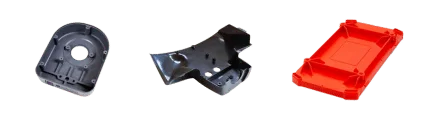
Vacuum casting is suited to appearance models, assembly trials, customer samples, functional evaluation and low-volume pre-production when molded behavior matters but hard tooling is not yet justified.
Create or qualify the master geometry and surface because every silicone mold and cast copy carries its details forward.
Plan parting, gating, venting and extraction around the geometry, resin behavior and expected number of usable casts.
Select material behavior, color, transparency, texture and finishing around the intended prototype or validation task.
The master, silicone mold, resin and finishing route are reviewed together so the delivered parts answer the intended design or market question.
Confirm CAD, drawing, quantity, appearance, material behavior and critical dimensions.
Produce and finish the reference master to the agreed geometry and surface standard.
Build the flexible tool with planned split lines, gates and vents.
Mix, degas, cast and cure the selected polyurethane under the controlled route.
Trim, finish, assemble when required and verify agreed characteristics.
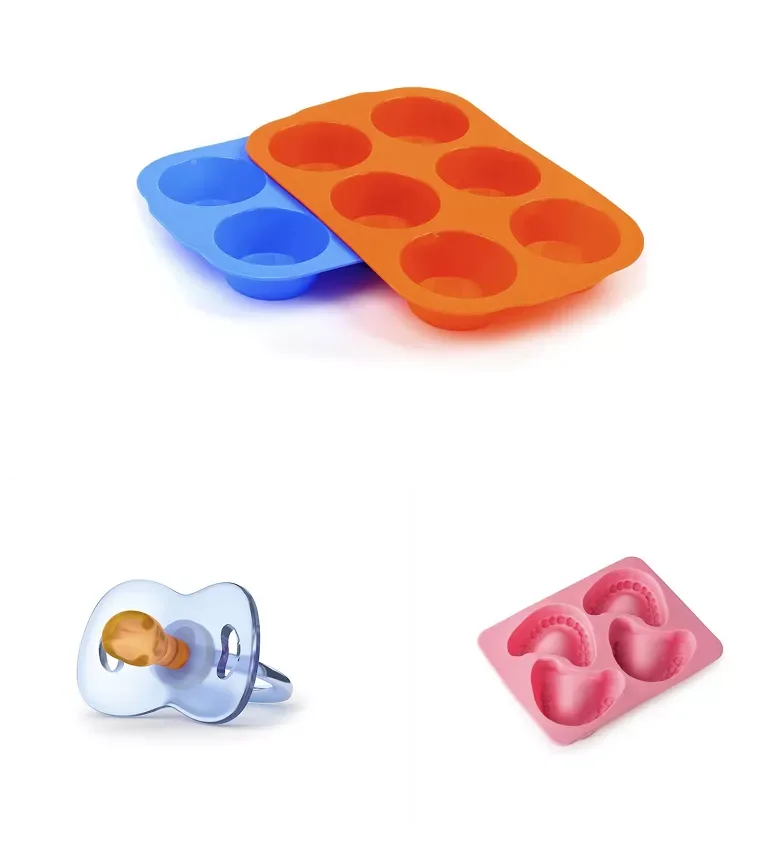
The process fills the gap between one-off additive prototypes and production injection molding. It is not a substitute for production tooling when long mold life, production resin data or high repeat volume is required.
Polyurethane systems can approximate different rigid, flexible, clear or temperature-resistant behaviors, but they are not automatically identical to production thermoplastics.
Used for housings, covers, bezels and components requiring a production-like molded appearance and controlled stiffness.
Suitable for grips, seals, boots, pads and protective elements where flexibility or tactile response must be evaluated.
Color matching, tinting, polishing, painting and texture can be reviewed for visual models and presentation parts.
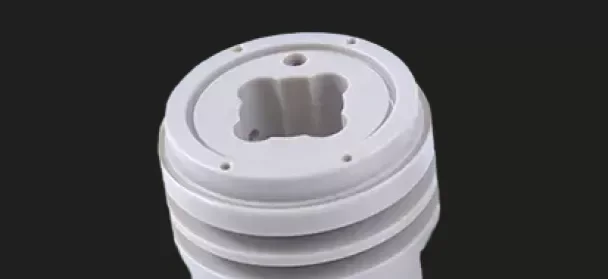
Final accuracy and appearance depend on the master, silicone mold, resin shrinkage, extraction, curing and finishing. Define the dimensions that control fit separately from general appearance expectations.
Vacuum casting uses flexible silicone molds and polyurethane materials for small batches. Injection molding uses hard tooling and production thermoplastics for higher-volume, repeat manufacturing.
Mold life depends on geometry, undercuts, resin, surface requirements and extraction stress. The expected usable quantity is reviewed for each project rather than treated as a fixed number.
Send a 3D model, drawing or critical dimensions, target quantity, required material behavior, color, texture, cosmetic zones and the purpose of the build.
Engineering will review the master route, polyurethane behavior, silicone mold plan, finish, quantity and inspection requirements before quotation.